Why this question matters
Whenever a new technology meets early childhood, parents reasonably ask: is this actually good for my child, or is it just shiny? Augmented reality in education is no different. Marketing copy promises the moon; cautious parents want evidence.
This article walks through what cognitive science and educational research actually say about AR flashcards for children aged 1–5. We’ll skip the breathless marketing and try to be honest about what the evidence supports, what it doesn’t, and where the science is still emerging.
The core principle: multimedia learning
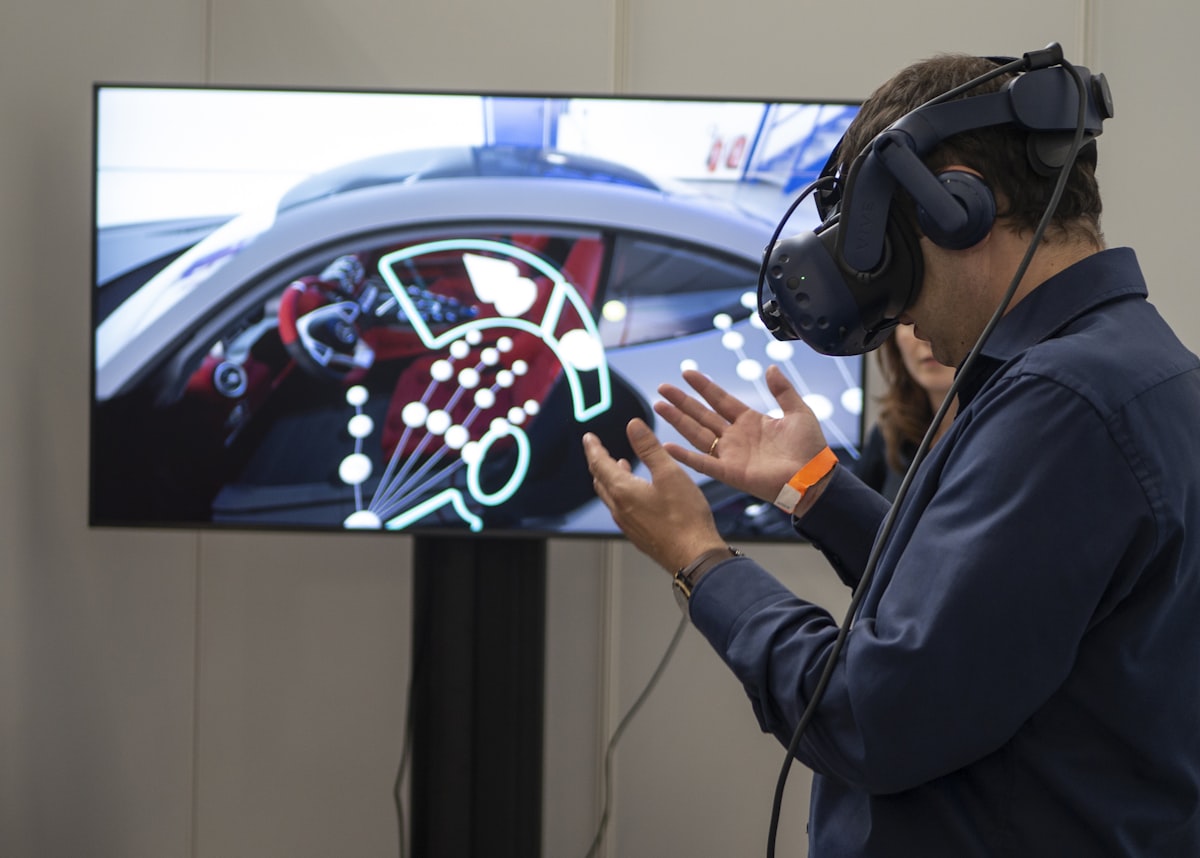
In 2001, the educational psychologist Richard E. Mayer published Multimedia Learning — now in its third edition — which synthesised decades of experiments into a set of principles. The most relevant one for AR flashcards is the multimedia principle: people learn better from words and pictures than from words alone.
“Better” here isn’t subjective. Across hundreds of studies, when learners are presented with a verbal description plus a relevant visual, they:
- Recall more of the material later.
- Transfer the concept to a new context more reliably.
- Form a more coherent mental model of how things relate.
AR flashcards are a near-perfect implementation of the multimedia principle:
- Printed word — the letter “T” on the card.
- Printed image — a small illustration of a tiger.
- 3D animated model — a tiger that walks across the card.
- Spoken sound — a recording saying “T for tiger” and the tiger’s roar.
That’s four reinforcing channels for a single concept. The child encodes “T → tiger → big striped cat → roars” through multiple sensory pathways at once.
Dual coding theory
Closely related is Allan Paivio’s dual coding theory (1971, refined over decades). Paivio proposed that human memory has two complementary systems — a verbal system that handles language, and a non-verbal system that handles imagery. Concepts encoded in both systems are remembered better than concepts encoded in only one.
This is why “a picture is worth a thousand words” turns out to be measurable, not a cliché. AR flashcards encode the same concept simultaneously in both systems — the verbal label and the rich visual model — which is exactly the condition under which Paivio predicted strongest recall.
Embodied cognition: movement matters
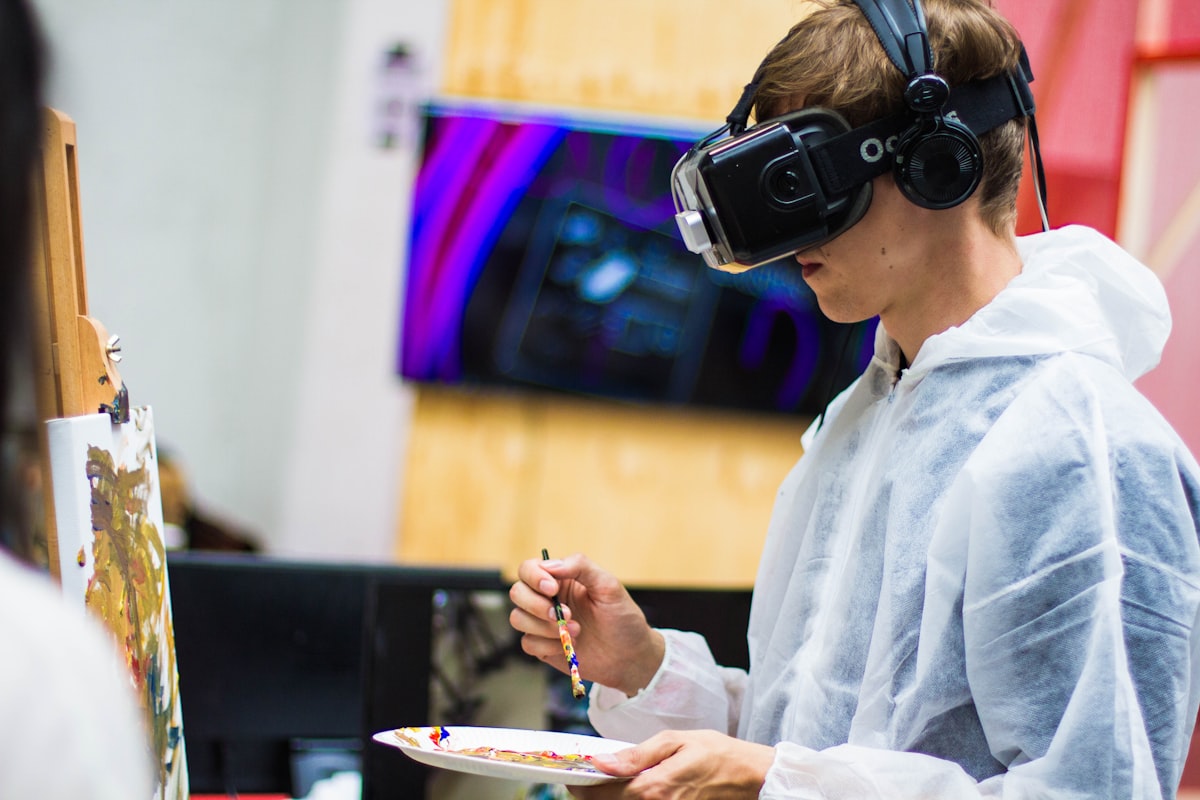
A more recent thread of research — embodied cognition — suggests that physical interaction with learning material strengthens the memory trace further. When a child physically moves the card to view the tiger from different angles, they:
- Engage their visuo-spatial processing more deeply.
- Form a 3D mental model rather than a flat one.
- Tie the concept to a motor memory — the act of tilting the card to see the tiger turn.
This is a real difference from looking at a picture book. The picture book is passive; AR is active in a literal, physical sense.
Attention: the rate-limiting nutrient of early learning
The single biggest predictor of how much a young child learns in a given session is how much attention they pay. Attention in 1–4 year-olds is famously short — about 5–15 minutes for any single activity.
Two strands of research are relevant here:
- Novelty drives attention. The orienting response to novel stimuli is hardwired. AR provides novelty without the dopamine-driven over-stimulation of an infinite-scroll feed.
- Joint attention amplifies learning. Children learn faster when an adult is attending with them. AR flashcards naturally create joint attention — both parent and child are looking at the same card together.
This second point is underrated. A YouTube video can hold a toddler’s attention, but the parent is usually somewhere else. An AR card pulls the parent in too — and that joint attention is gold for language development.
Vocabulary acquisition
Children aged 1–5 are in their “fast-mapping” phase — they can hear a new word once or twice in context and tentatively map it to a concept. Studies on vocabulary acquisition consistently find that:

- Words associated with vivid imagery are learned faster.
- Words heard in interactive (not passive) contexts are retained longer.
- Words repeated across multiple sensory channels (heard, seen, gestured) survive in long-term memory.
AR flashcards meet all three conditions. This is the strongest evidence-based case for using them: as a supplemental vocabulary-building tool, they appear to genuinely work.
What about screens?
This is where you need to be honest. The American Academy of Pediatrics recommends limiting screen time for children under 18 months (essentially to video calling), and limiting children aged 2–5 to roughly an hour a day of high-quality content.
AR flashcards are screens — but they have several qualities that distinguish them from passive video:
- Sessions are naturally short (the cards run out).
- The content is concept-dense (one card = one well-defined idea).
- The parent is naturally co-present.
- There’s no algorithmic feed pulling the child to the next thing.
The current research consensus, such as it is, is that interactive, co-viewed screen content is more developmentally neutral than passive viewing — and may be net-positive when it directly supports vocabulary or concept learning. AR flashcards fit that profile better than almost any other category of children’s app.
What the research does not support
To stay honest:
- There is no strong evidence that AR flashcards make children “smarter” overall.
- There is no evidence they replace the developmental value of free play, outdoor time, or reading aloud.
- The long-term effects on attention and screen tolerance are still being studied.
The right mental model is supplementary, not transformational. AR flashcards add one effective tool to your kit, alongside picture books, blocks, conversation, songs, and time outdoors.
Practical implications for parents
The science suggests four habits that maximise the learning benefit:
- Co-view, don’t hand off. Joint attention is the secret ingredient.
- Narrate everything. Speak the word, describe the animation, ask a question. Your voice is the verbal channel.
- Short, frequent sessions. Three 10-minute sessions in a week beat one 30-minute session.
- Connect AR to the real world. “Remember the AR elephant? We’re going to see real ones at the zoo.” That bridge is where the deeper learning happens.
Where Preschoolify fits
Preschoolify’s AR flashcards were designed around these multimedia-learning principles: clear printed concepts, sharp 3D models, distinctive audio, and short content packs that align with how toddler attention actually works. The Numbers, Planets, and Big-or-Small kits in particular were designed to support classification and comparison reasoning — two skills heavily emphasised in modern early-years curriculum frameworks.
Further reading
- Mayer, R. E. Multimedia Learning (Cambridge University Press).
- Paivio, A. Imagery and Verbal Processes (the original dual-coding text).
- American Academy of Pediatrics — guidance on media use in early childhood (publicly available).
- Hirsh-Pasek et al., Putting Education in ‘Educational’ Apps: Lessons from the Science of Learning (a useful primer on what makes an app actually educational).
Bottom line
AR flashcards aren’t a silver bullet, but they’re not a gimmick either. They sit at an unusually good intersection of cognitive-psychology principles: multimedia coding, dual coding, embodied interaction, and joint attention. Used in short, supervised, narrated sessions, they’re one of the more effective tools available for supplementing a young child’s vocabulary and concept learning at home.
The technology is the wrapper; the learning principles inside it are decades old, well-validated, and quietly powerful.