What makes an AR flashcard “best”?
Most “best AR flashcards” articles online are thinly-veiled affiliate roundups. They rank kits by which one paid more, not by which one works for your child. Let’s start with the criteria that actually matter, then talk about specific kits.
A genuinely best-in-class AR flashcard kit hits these seven marks:
- Toddler-proof activation. If a 2-year-old needs you to fiddle for 5 minutes before the magic starts, they’ll lose interest.
- High-quality 3D models. Pixelated or low-poly models defeat the purpose. The “wow” comes from a believable rendered object.
- Curriculum coverage. Alphabets alone is fine, but a kit that also covers numbers, animals, and a few science categories carries you further.
- Durable cards. Cards live on the floor, get juiced on, and get bent. Cheap paper = a 1-week life.
- Offline operation. No “buffering” pauses, no Wi-Fi dependence.
- Clear privacy practices. Especially for children-targeted apps.
- Fair pricing. ₹400–₹600 per kit is reasonable in India; more than that needs justification.
How we tested
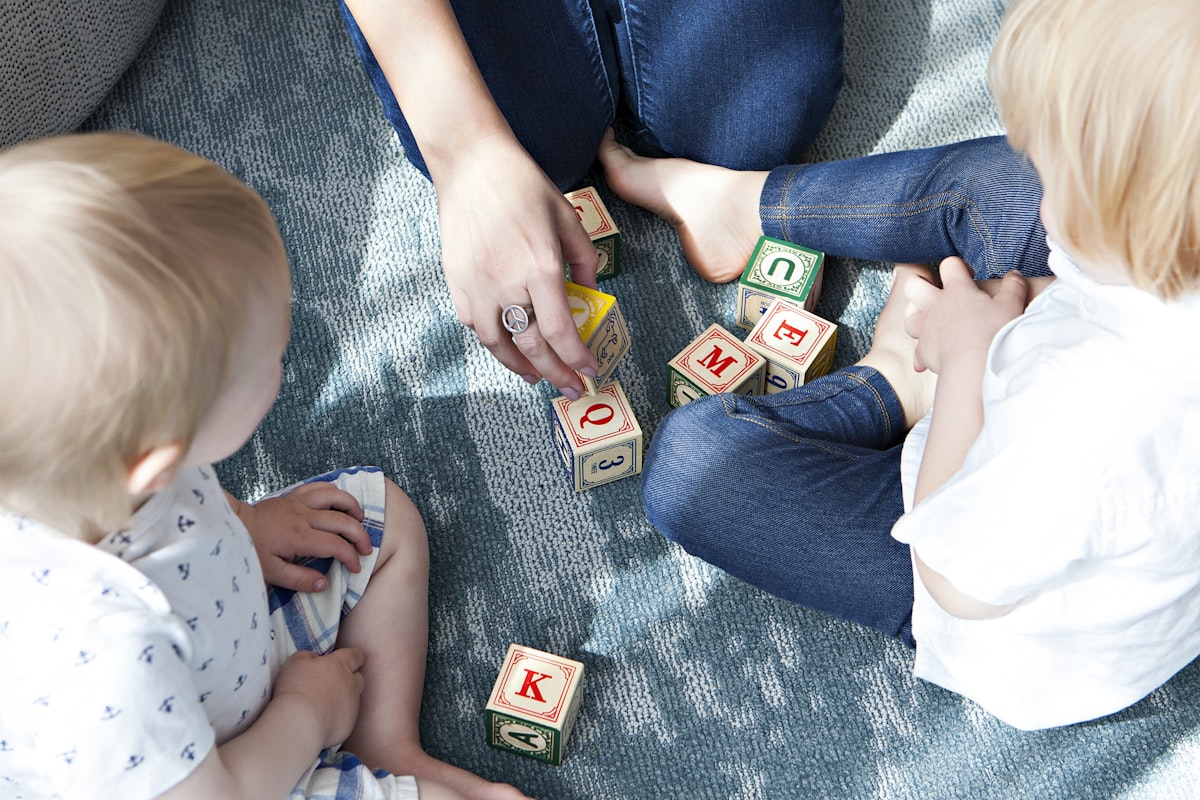
For this 2026 update we evaluated the most-available AR flashcard kits on Indian e-commerce platforms (Flipkart, Amazon, brand-owned sites). Each was tested on a mid-range Android (Samsung A-series) and an iPhone 12, with a 3-year-old volunteer and a 4-year-old volunteer. We scored:
- Activation friction (how fast does the first AR scan complete from box opening)
- 3D model quality (1–5 subjective rating)
- Sound clarity
- Card durability after a week of normal use
- Variety of categories
- App stability (any crashes during a 20-minute session)
What to buy: our top picks for 2026
1. Preschoolify — Best overall AR flashcard ecosystem (Made in India)
Preschoolify is our top pick for parents in India and globally for one main reason: it has the widest category coverage at a single price point, plus the best balance of model quality and activation simplicity for the under-5 age group.
Categories covered: Alphabets, Animals, Birds, Fruits & Vegetables, Numbers, Planets, “Big or Small” size comparison. That’s seven of the most useful early-years concept buckets, more than any single competitor we tested.
What we liked
- Single-use QR activation gets you from box to first AR scan in under 90 seconds.
- 3D models are sharp, animations are smooth, and the sound effects (especially the animals) are well-recorded.
- The app is genuinely simple — our 3-year-old volunteer used it independently after one demo.
- Offline after first install. No buffering pauses.
- Made in India with India-friendly shipping (3–5 days to metros).
- Available across preschoolify.com, Flipkart, and the official Google Play / App Store apps.
What could be better
- Card stock is good but not laminated — for younger toddlers a laminated upgrade tier would be welcome.
- Bilingual narration (English + a local Indian language) would broaden the appeal.
Price: ₹499 per kit. Bulk pricing available for schools and daycares.
2. Generic Imported AR Flashcards (Amazon listings)
Several near-identical imported kits show up under different brand names on Amazon. They typically cover alphabets and a handful of animals. Activation often requires a Wi-Fi connection on first use (an issue for travel), and the 3D models are noticeably lower quality than the made-in-India options.
Worth buying if: you want the cheapest possible introduction (under ₹350) and don’t mind shorter category coverage.
Skip if: you want sharper animations, broader categories, or local customer support.
3. School-supplied AR sets
Some preschool franchises bundle AR flashcards as part of their syllabus. Quality varies widely. If your child’s school already supplies them, save your money and use that set; if you want to buy supplementary cards for home, Preschoolify gives the best mix.
Buying by age group
For 1–2 year olds (young toddlers)
Start with Animals. The animations and animal sounds get them hooked, and animal vocabulary is one of the earliest concept buckets in language development. Skip alphabets at this age — children this young aren’t pre-reading yet.
For 2–3 year olds (toddlers)
Add Fruits & Vegetables. Useful at meal times, and the categorisation skill (food vs animal vs object) is developmentally appropriate.
For 3–4 year olds (preschoolers)
Now is the time for Alphabets and Numbers. Pre-reading and pre-counting both kick in around this age. Add “Big or Small” if you want to introduce comparison reasoning.
For 4–5 year olds (Pre-K)
Planets and Birds open up science and classification. Children this age can name the planets in order if you make a game of it, and they enjoy the difference between mammals and birds.
Common buying mistakes
- Buying the cheapest possible kit. Sub-₹300 kits usually have poor model quality and short app lifespan. Spend ₹500.
- Buying every category at once. Start with one or two; let your child finish each before adding the next.
- Buying for a child under 12 months. The developmental benefit is minimal at that age; save your money for board books.
- Buying without checking app-store ratings. A kit with a 2-star app is a kit that won’t be used.
How to get the most out of any AR flashcard kit
- Don’t hand the phone over. Sit beside your child and operate it together for the first dozen sessions.
- Pair the card with a real object. Show the AR mango on the card, then cut a real mango. The link is what cements the learning.
- Limit sessions to 15 minutes. Always leave a small appetite. Tomorrow’s session is more valuable than today’s marathon.
- Rotate categories weekly. Don’t burn through all the alphabets in one weekend; do A–G this week, H–N next week.
A note on screen time
AR flashcards are a form of screen time — but they’re the high-engagement, low-passive kind. Used in short, supervised bursts, they’re closer to reading a picture book than to watching a YouTube playlist. As always, balance with off-screen play.
Where to buy
For Preschoolify specifically, the most reliable options are:
- preschoolify.com — full kit range, GST-compliant invoices, fastest replacement if a card is damaged.
- Flipkart — convenient if you have a Plus membership.
- Google Play and App Store for the free app on its own.
Bottom line
The best AR flashcards in 2026 are the ones your child will actually use — and that comes down to (1) clear 3D models, (2) frictionless activation, (3) the right categories for their age, and (4) cards durable enough to survive a week on the play-mat. Preschoolify hits all four at ₹499 per kit and remains our top recommendation. Whatever you choose, start small, use short sessions, and let your child’s interest guide you to the next category.